
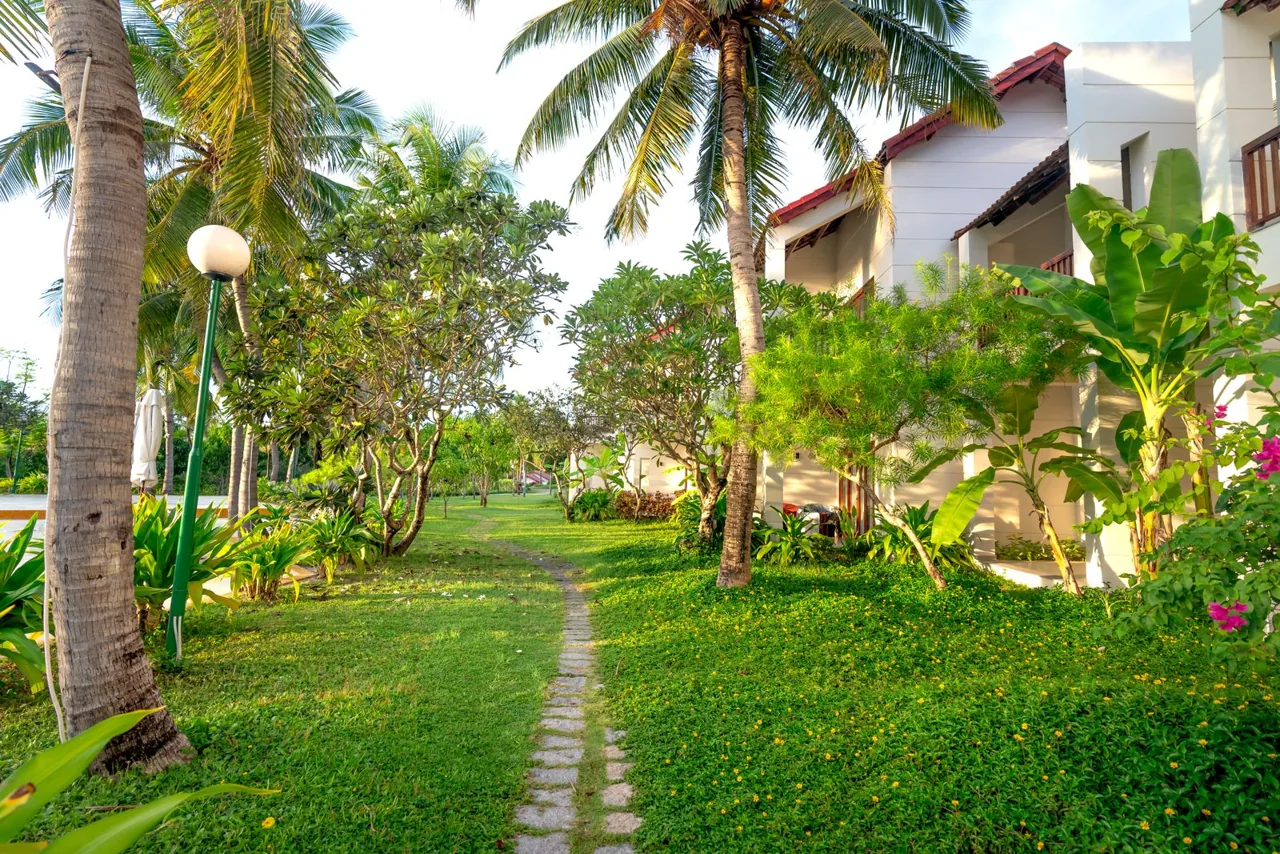
A great villa garden looks like it happened by accident, which is exactly why it's so hard to pull off. That effortless tropical lushness, the frangipani leaning over the pool, the wall of green that hides the neighbours, is the product of real thought. Whether you own a villa or you're just trying to understand why some feel like paradise and others like a car park with a plant, the principles are worth knowing.
Plant for the climate, not the catalogue
Bali's heat and humidity do half the work if you let them. Frangipani, or plumeria, is the signature tree for good reason: it's tough, sculptural and scents the whole garden at dusk. Add heliconia and bird of paradise for structure, bougainvillea for colour against a wall, and ferns and philodendrons to fill the shade beneath. These plants thrive on neglect and thunderstorms, which is precisely what a villa garden gets.
Resist the temptation to import fussier ornamentals that need constant coaxing. The gardens that earn their keep are built from plants that want to be there, growing fast and forgiving the occasional missed watering.
Design around the pool and the sightlines
In a villa, the garden and the pool are one composition. Planting should frame the water, soften its edges and give swimmers something green to look at, without dropping so much leaf litter that the skimmer never rests. A screen of tall planting or a living wall along the boundary buys privacy far more elegantly than a bare fence.
Think about sightlines from inside, too. The best villa gardens are designed to be seen from the bed, the sofa and the breakfast table, so every key view lands on something considered rather than on a blank wall or the neighbour's roof.
Water, stone and shade
A tropical garden isn't only plants. A small water feature or a stone-lined pond adds sound and coolness, and traditional Balinese carved stone, a statue half-swallowed by ferns, a mossy water spout, gives the space a sense of place that planting alone can't. These details are what separate a generic resort look from something rooted in Bali.
Shade is the luxury guests notice without naming it. A mature tree or a shaded pavilion turns an exposed garden into somewhere you can actually sit at midday, which in this climate is the difference between a garden you admire and one you use.
The upkeep reality
Here's the part the photos never show: a lush tropical garden grows relentlessly. Everything wants to double in size, drop leaves in the pool and reach for the light, which is why nearly every well-kept villa has a gardener who comes regularly to prune, sweep, feed and keep the whole thing from turning into jungle. Budget for that time, or the paradise reverts within a season.
Done right, the garden is the part of a villa that guests remember longest. It's the frame around every photo, the scent of the evenings, the reason the pool feels like a lagoon rather than a rectangle. Plant for the climate, design for the views, and give it the hands it needs, and a villa garden will earn its keep many times over.